Applied Nucleation: The Science Behind Accelerating Forest Regeneration
In a world where ecosystems are under relentless pressure from deforestation, climate change, and human encroachment, the urgency to restore degraded landscapes has never been higher. Traditional reforestation efforts often involve mass planting of trees or passive protection of degraded lands. While these approaches have merit, they frequently fall short of reviving the full complexity and resilience of natural ecosystems. Enter applied nucleation, a restoration strategy that taps into nature’s own regenerative potential, offering a promising avenue to accelerate forest recovery and restore the vitality of landscapes that have been stripped of life.
Understanding Applied Nucleation
At its core, applied nucleation is a process inspired by the way nature regenerates itself. In a forest, when a small cluster of pioneer trees establishes in a disturbed or barren area, they often act as a “nucleus” that attracts other plants, animals, and microorganisms, gradually transforming the environment into a thriving ecosystem. Applied nucleation leverages this principle intentionally. Instead of attempting to plant an entire forest uniformly, restoration practitioners strategically introduce clusters of native trees and shrubs into degraded areas. These clusters serve as biological catalysts, creating microenvironments that facilitate seed dispersal, soil enrichment, and habitat formation.
The elegance of applied nucleation lies in its mimicry of natural processes. By fostering small pockets of regeneration rather than imposing large-scale plantations, it allows ecosystems to rebuild themselves organically.
The Science of Ecological Acceleration
Applied nucleation is rooted in ecological theory, particularly the concepts of succession and facilitation. Ecological succession describes the gradual process by which ecosystems change over time, moving from barren land to complex, biodiverse forests. In many degraded landscapes, succession can stall or regress because essential elements—such as seed sources, nutrient cycling, or microhabitat structures—are missing. Applied nucleation intervenes in this process, providing a jumpstart by planting species that can thrive in harsh conditions and facilitate the arrival of other species.
For instance, pioneer species, often hardy trees or shrubs, are planted first because they tolerate degraded soils and extreme weather. These pioneers improve soil quality by adding organic matter and fixing nutrients, providing shade, and reducing wind and water erosion. Over time, secondary species begin to establish naturally, drawn by the improved conditions.
Restoring Soil and Microclimates
One of the critical challenges in forest restoration is the degraded soil often left behind by deforestation or intensive agriculture. Compacted, nutrient-poor soils struggle to support new plant growth, making reforestation efforts slow and costly. Applied nucleation addresses this problem indirectly but effectively. As pioneer trees grow, their root systems stabilize soil structure, while fallen leaves and decaying organic matter enrich the soil with nutrients. Over time, this process recreates the soil microhabitats necessary for a diversity of plant and microbial species to thrive.
In addition, the clusters of vegetation modify local microclimates. Sunlight is filtered through the canopy, wind speeds are reduced, and humidity levels increase within these small patches. Such microclimatic changes are crucial because many secondary plant species, as well as wildlife, are sensitive to exposure and temperature extremes.
Enhancing Biodiversity Naturally
Biodiversity is the cornerstone of a resilient forest ecosystem, but restoring it requires more than simply planting a single tree species. Applied nucleation excels in this regard because it encourages natural colonization by a wide array of organisms. Birds, bats, and insects are attracted to the pioneer clusters, and they bring with them seeds from surrounding areas. This natural seed dispersal accelerates the introduction of diverse plant species, creating a self-sustaining cycle of regeneration.
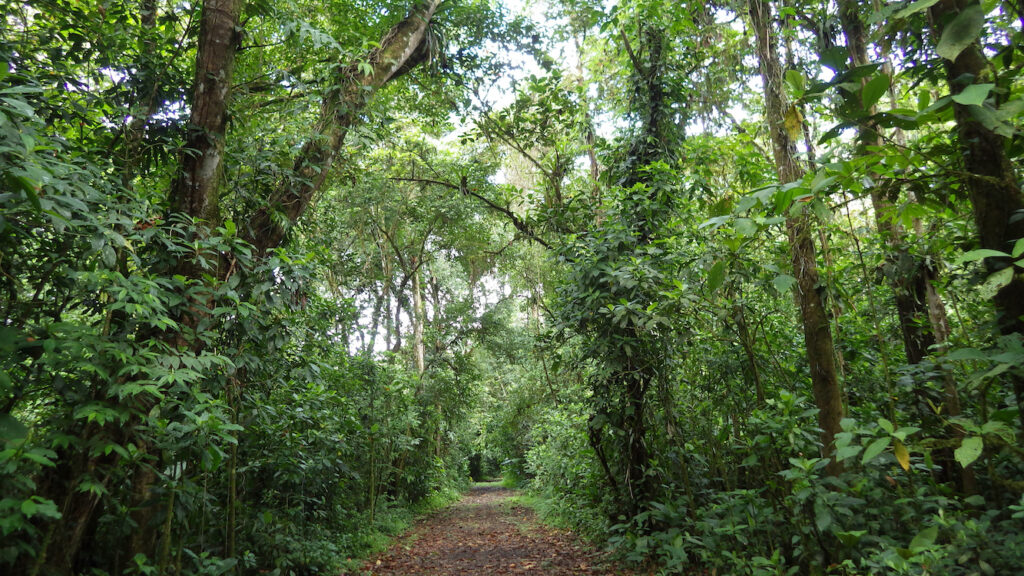
Moreover, the clustered approach allows species interactions to develop more naturally. Pollinators find the habitat conducive to reproduction, predators maintain ecological balance, and decomposers enrich the soil. Over time, the small nuclei of vegetation expand and coalesce, forming heterogeneous forests with layered canopies, understory shrubs, and ground cover.
Applied Nucleation and Climate Resilience
Forests are not only reservoirs of biodiversity—they are critical allies in the fight against climate change. Restoring forests through applied nucleation enhances carbon sequestration, stabilizes local climates, and mitigates soil erosion and flooding. Because this method prioritizes natural succession and species diversity, it often results in forests that are more resilient to climate extremes than uniform plantations.
Diverse forests are better able to withstand pests, diseases, and the impacts of drought or storm events. Each species contributes unique traits to the ecosystem, such as drought tolerance, nitrogen fixation, or shade provision, which together create a more robust and adaptive environment. By promoting natural regeneration rather than imposing monocultures, applied nucleation aligns restoration with the ecological complexity required to withstand the uncertainties of a changing climate.
Cost-Effectiveness and Practical Advantages
Beyond ecological benefits, applied nucleation offers practical advantages for large-scale restoration projects. Traditional planting methods can be prohibitively expensive and labor-intensive, especially in remote or degraded areas. Mass tree planting often requires heavy machinery, ongoing irrigation, and maintenance, yet it does not guarantee long-term survival of the forest. In contrast, applied nucleation focuses on planting smaller clusters strategically, reducing labor and resource inputs while maximizing natural processes.
Communities can also participate more easily in applied nucleation initiatives, creating social and economic co-benefits. Local knowledge about native species and landscape dynamics can inform cluster placement, while community involvement in planting and monitoring fosters stewardship and long-term care of restored forests.
Case Studies and Global Applications
Applied nucleation has been successfully implemented in diverse regions around the world. In tropical Latin America, experiments in abandoned pastures have shown that planting small clusters of fast-growing pioneer trees can catalyze the return of native forest species within a decade. In Southeast Asia, applied nucleation has been used to rehabilitate logged forests, with clusters of dipterocarp trees serving as nuclei for natural regeneration. Even in arid or semi-arid regions, research demonstrates that clusters of drought-tolerant species can initiate soil improvement and vegetation recovery, creating stepping stones for broader ecosystem restoration.
These case studies highlight a key insight: applied nucleation is not a one-size-fits-all solution. Success depends on understanding local ecological conditions, selecting appropriate species, and monitoring regeneration dynamics.
The Human-Nature Connection
Applied nucleation also carries profound philosophical implications for how humans relate to the natural world. Rather than attempting to dominate or control landscapes, this method embodies a humble partnership with ecological processes. Humans provide the initial spark—the nucleation point—but it is nature itself that carries forward the complex work of rebuilding forests. In this sense, applied nucleation is both a scientific strategy and a cultural statement, one that emphasizes collaboration with the living world rather than domination over it.
Communities participating in applied nucleation projects often report a renewed sense of connection to the land. Watching clusters of trees grow and expand into thriving forests fosters a tangible sense of hope and accomplishment.
Challenges and the Path Forward
Despite its promise, applied nucleation is not without challenges. Selecting the right species, ensuring initial survival, and managing invasive species require careful planning and adaptive management. Additionally, degraded landscapes may suffer from ongoing pressures such as grazing, illegal logging, or urban expansion, which can undermine restoration efforts. Long-term monitoring and community engagement are essential to address these challenges and ensure that nuclei grow into resilient forests.
The future of applied nucleation lies in integrating scientific research, traditional ecological knowledge, and technological tools. Remote sensing, GIS mapping, and ecological modeling can help identify optimal sites for cluster planting and predict regeneration outcomes.
Conclusion
Applied nucleation represents a paradigm shift in how we approach forest restoration. By mimicking nature’s own regenerative strategies, it accelerates forest recovery, restores biodiversity, and strengthens ecosystem resilience. This method not only addresses the ecological challenges of degraded landscapes but also fosters a deeper connection between humans and the natural world. In a time when ecosystems are under unprecedented threat, applied nucleation offers a hopeful, science-based pathway to restore forests, sequester carbon, and rebuild the intricate web of life that sustains our planet.
Through strategic intervention and patient observation, small clusters of trees can become the starting point for entire forests, demonstrating that restoration is not just about planting trees—it is about creating the conditions for life to flourish once again.