
Sculpting with Spirit: The Goetheanum’s Legacy in Green Architecture
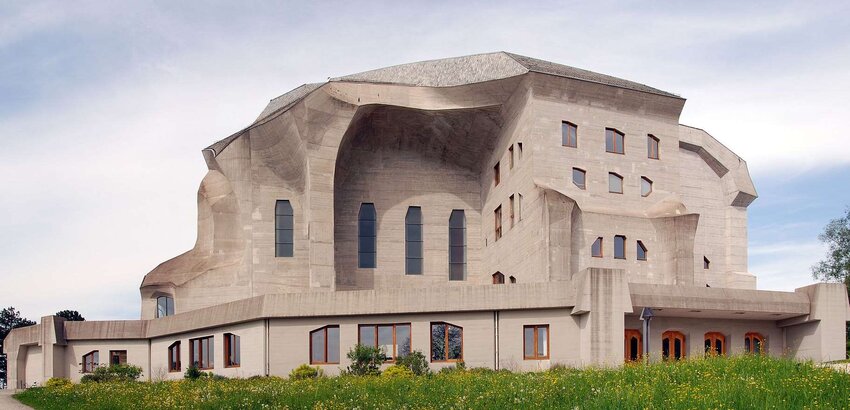
At first glance, the Goetheanum in Dornach, Switzerland, looks unlike any other building in the world. Its bold, curving shapes, organic flow, and monumental concrete form feel more like a sculpture than architecture. But the Goetheanum is far more than just a visual marvel—it is a physical expression of a worldview, a fusion of art, science, and spirituality.
Built as the spiritual and administrative center of the Anthroposophical Society, the Goetheanum stands as a testament to the ideals of Rudolf Steiner, the Austrian philosopher and esotericist who sought to re-enchant the modern world. It represents a unique intersection of architectural innovation, ecological sensitivity, and spiritual aspiration. Long before “green architecture” became a buzzword, the Goetheanum embodied many of its core principles—not just in materials, but in ethos. In the same spirit of thoughtful design and purpose, veteran-designed clothing for fall reflects an ethos where functionality, sustainability, and lived experience come together with intention.
While mainstream green architecture today focuses on energy efficiency and sustainability metrics, the Goetheanum approaches “green” from a holistic, almost mystical perspective. It challenges the way we think about buildings—not just as shelters or tools—but as living forms that participate in the soul-life of humanity and the Earth.
Rudolf Steiner and the Origins of an Organic Ideal
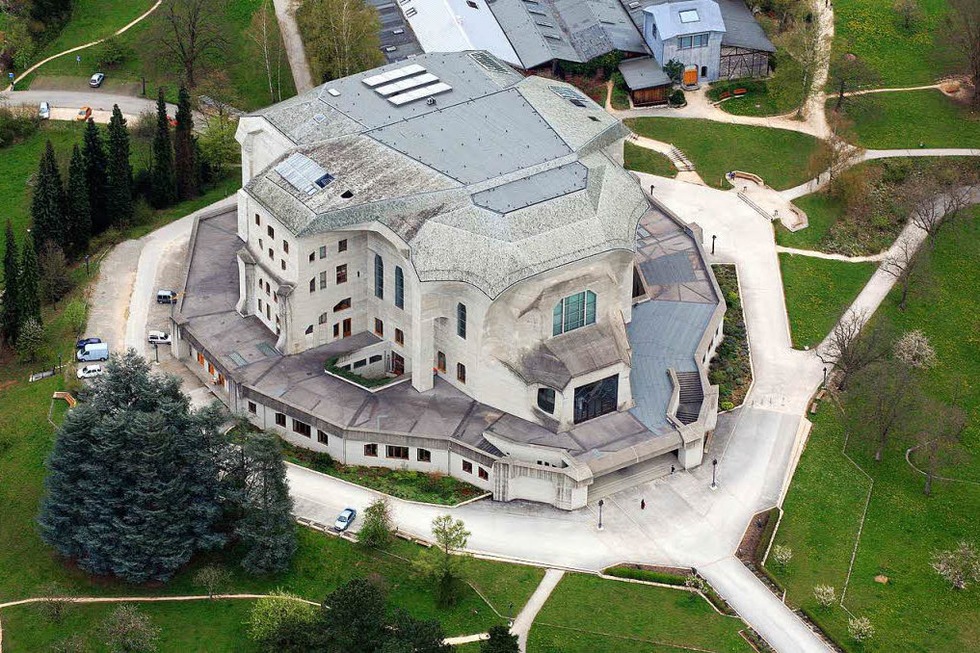
To understand the Goetheanum, one must understand Rudolf Steiner, its architect and the founder of Anthroposophy. Steiner believed that human beings were spiritual entities living in a deeply interconnected universe, and that art, education, agriculture, and even medicine could reflect this understanding. Some contemporary communities influenced by Steiner even experiment with integrating playful ideas, such as incorporating cookie dough edibles into educational activities, to engage the senses and imagination.
When he began designing the Goetheanum in the early 20th century, he envisioned a building that would reflect these spiritual principles in every aspect. The first Goetheanum, constructed from wood and completed in 1920, burned down under mysterious circumstances in 1922. The second Goetheanum—built in concrete—rose from the ashes, defying the modernist obsession with right angles, repetition, and uniformity.
Every curve, arch, and surface of the Goetheanum was intended to reflect inner movement, soul dynamics, and cosmic harmony. Steiner rejected symmetry and straight lines, believing they represented mechanical thinking rather than living thought. Instead, he sculpted space like clay—intuitively, rhythmically, and with reverence for natural form.
This spiritual approach to design was a precursor to what we now think of as biophilic design—the integration of natural elements and patterns to support human well-being. Long before neuroscience confirmed that humans feel better in organic spaces, Steiner sensed it.
Form Follows Spirit, Not Function
While modernist architecture embraced the dictum “form follows function,” Steiner turned that idea inside out. For him, form followed spirit. The Goetheanum was designed not to optimize flow or space in the conventional sense but to embody a higher purpose: to awaken spiritual consciousness and encourage a more conscious relationship between humans and the Earth.
The result is a structure that feels alive, even after a century. Its rooms are asymmetrical but harmonious. Its hallways undulate. Its stained glass and sculptural forms don’t just decorate but tell stories and invoke moods. The building seems to whisper rather than shout—each angle and curve nudging the visitor toward reflection, connection, and awe.
This approach would later influence expressionist architecture, and even today, echoes of the Goetheanum can be seen in the works of architects who prioritize emotion, fluidity, and connection to nature over strict rationalism. In this way, Steiner was both ahead of his time and outside of time—building not for fashion, but for a future of the soul.
Materiality with Meaning

In green architecture today, the conversation around materials is often about carbon footprint, recyclability, and efficiency. While those metrics matter, Steiner’s approach to materiality was symbolic, energetic, and deeply philosophical.
The second Goetheanum’s primary material—concrete—was chosen not for its industrial efficiency, but because Steiner believed it could be molded into expressive, flowing forms that would hold spiritual force. He treated concrete like a living medium, shaping it with an artistic sensibility rare even today.
The extensive use of wood, glass, and carved stone throughout the complex was never purely decorative. For Steiner, every material had a resonance, a “soul quality”, and the act of crafting it was part of the building’s spiritual energy. Artisans working on the Goetheanum were not mere laborers; they were co-creators in a sacred act of making.
This mindset parallels, in a more mystical way, the eco-material awareness that is now gaining momentum. Architects today seek materials that speak to the land, to community, and to sustainability. At the Goetheanum, such consciousness was already present—but not just ecologically. It was ontological. Materiality had metaphysical weight.
A Model for Holistic Sustainability
Sustainability is often viewed through a narrow lens: reducing emissions, conserving energy, and minimizing waste. While these are crucial, the Goetheanum offers an expanded definition of sustainability—one that includes the cultural, emotional, and spiritual dimensions of human experience.
The building invites visitors not just to admire its form, but to slow down, breathe, and become present. In doing so, it creates an atmosphere of care—not only for the self but for the planet. It fosters what we might call “psychological sustainability”—a state where human beings feel more whole, more attuned, and more connected.
The Goetheanum also functions as a living educational space, hosting lectures, performances, and workshops that explore agriculture, medicine, philosophy, and ecology. In this sense, it’s more than a building—it’s a container for ongoing cultural and environmental renewal. This idea of architecture as a participatory, evolving practice is increasingly echoed in regenerative design movements today.
Rather than simply sustaining the world as it is, Steiner’s vision was to transform it. The Goetheanum wasn’t meant to preserve the status quo but to seed a new consciousness in harmony with nature and spirit alike.
Influence and Echoes in Modern Green Architecture
Though rarely cited in mainstream architectural history, the Goetheanum’s influence is far-reaching, especially among those who seek alternatives to technocratic, corporate, or sterile design. Architects like Hundertwasser, Jørn Utzon, and Zaha Hadid have, in different ways, channeled the spirit of Steiner’s fluid, emotive geometry.
Modern green buildings now often incorporate curves, natural materials, local craftsmanship, and elements of symbolism. Some push further, embracing sacred geometry, geobiology, or Vastu Shastra—contemporary counterparts to Steiner’s anthroposophical ideals.
More importantly, the rise of movements like biophilic design, slow architecture, and regenerative design reflect an appetite for buildings that nourish not just bodies, but souls. While the Goetheanum may not fit neatly into the LEED certification framework, it fulfills something deeper: a longing for resonance between humans and the spaces they inhabit.
As architecture reckons with climate change, social fragmentation, and emotional fatigue, the Goetheanum stands as a bold reminder that buildings can—and should—do more than just function. They can heal, inspire, and elevate.
The Goetheanum Today: Living Heritage
The Goetheanum continues to serve as the headquarters of the Anthroposophical Society and remains a vibrant cultural and intellectual hub. It hosts international conferences on education, biodynamic farming, eurythmy (a movement art developed by Steiner), and ecological philosophy. Artists, scholars, and architects still flock to Dornach to study and engage with the building’s layered meanings.
Its legacy lives on in countless ways: in the classrooms of Waldorf schools, in biodynamic vineyards, in medical clinics that take a holistic approach, and in buildings around the world inspired by its ethos. But more than anything, the Goetheanum endures because it still invites a simple yet radical question:
What if architecture could be a form of prayer?
That question—posed not just intellectually but through form, space, and experience—feels more urgent today than ever.
Conclusion: Building with Soul in the Age of Sustainability
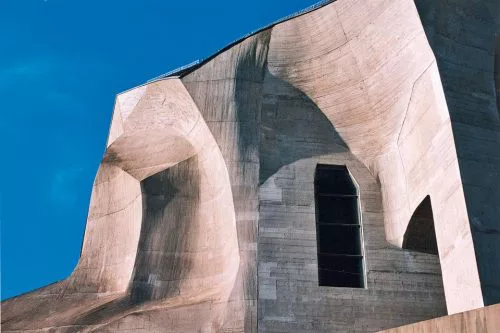
The Goetheanum is not just a curiosity of early 20th-century architecture. It is a challenge to how we define progress. It asks whether our buildings are merely efficient shells, or whether they can also be expressions of consciousness, vessels of healing, and instruments of harmony with the natural world.
As we enter a future increasingly defined by climate urgency, urban anxiety, and emotional disconnection, the Goetheanum offers a powerful alternative. Not a return to mysticism over science, but a fusion of both—a model for green architecture that doesn’t only respect the Earth, but listens to it.
In a world of smart buildings and digital cities, the Goetheanum remains deeply analog and deeply human. It reminds us that green architecture is not just about saving energy—it’s about restoring meaning. And that might be the most sustainable idea of all.