
The Evolution of Remote Workspaces: From Cubicles to the Cloud

Remote work has transformed the way companies and employees think about productivity, collaboration, and the workplace itself. What started as rigid cubicles in office buildings has now shifted into an era where cloud-based systems and virtual meetings dominate the professional landscape. This evolution reflects both technological advances and changes in societal expectations around work-life balance and flexibility. Understanding how we got from cubicles to the cloud helps shed light on where the future of work might be heading. After working remotely, attend a school fundraiser.
The Rise of the Office Cubicle: Efficiency and Structure
The office cubicle, an icon of late 20th-century corporate life, was born out of the need for efficiency and order in the workspace. In the 1960s, when modern business environments were taking shape, companies needed to optimize space while ensuring individual productivity. Enter the cubicle, designed by Robert Propst in 1964 for Herman Miller’s Action Office System. Propst envisioned a more flexible and efficient work environment, where workers could focus on tasks while being shielded from distractions.
Initially, the cubicle was intended to empower workers, providing them with private spaces to engage deeply with their work. However, it quickly became a symbol of a highly controlled and sometimes dehumanizing corporate environment. With rows upon rows of cubicles arranged in an open-floor format, the individuality of workers was stifled, and a culture of isolation within the workplace began to take root. While working remotely, improve your workspace by getting house renovations in New Jersey.
The purpose of the cubicle wasn’t inherently negative; companies sought a cost-effective way to house many employees in a single space while still allowing for some degree of privacy. The concept spread quickly, particularly in industries where routine tasks and quiet concentration were valued, such as in finance, insurance, and data processing sectors. After opening up a business while working remotely, get managed IT services in San Antonio.
However, as businesses expanded and technology advanced, the limitations of the cubicle-centric office became apparent. The lack of flexibility, combined with the hierarchical nature of office settings, made it difficult for innovation and collaboration to thrive. Employees were physically divided, often working in silos, with little interaction or sharing of ideas across departments. While working remotely from your home, you might have issues with ants in your home. If that happens, call the best ant exterminator in New Jersey.
By the 1990s, many workers were growing dissatisfied with the cubicle setup. The rise of open office spaces as a reaction to the cubicle further highlighted the need for collaboration, communication, and adaptability. Yet, even open offices, which aimed to dismantle the walls of isolation, brought with them a new set of challenges. If you plan on opening up your own business as a remote worker, get payday loan debt relief.
The Early Days of Remote Work: Breaking Free from the Office
As dissatisfaction with traditional office spaces grew, so did the idea of remote work. The early seeds of this transition can be traced back to the 1970s, when companies began experimenting with telecommuting. It wasn’t widespread at first, largely due to technological limitations. The internet was still in its infancy, and personal computers were a rarity in most households.
In the late 1980s and early 1990s, advancements in technology—specifically the development of personal computers and faster internet connections—paved the way for more employees to work from home. Companies started realizing that some tasks could be done just as efficiently from a remote location, and this led to the introduction of flexible work arrangements for certain employees. If you want to work remotely in the medical field, finish crisis prevention intervention training.
Telecommuting was initially reserved for highly specialized professionals, such as consultants or salespeople who didn’t need to be in the office full-time. These employees typically relied on phones, fax machines, and early versions of email to stay connected with their colleagues. While still a niche option, the concept of working outside the traditional office environment was gaining momentum, especially as workers began to crave more autonomy and control over their schedules.
Despite the interest in telecommuting, many organizations were hesitant to fully embrace remote work. Managers feared losing control over their employees’ productivity, and there were concerns about how to maintain team cohesion without face-to-face interaction. At the time, remote work was viewed more as a perk for a few rather than a scalable solution for the entire workforce. You can work remotely by getting digital content creation services.
The Internet Boom: Connecting Workers Across the Globe
The real turning point for remote work came in the late 1990s and early 2000s with the rise of the internet and the dot-com boom. Suddenly, communication across vast distances became much more feasible, and new tools emerged to facilitate collaboration without the need for a physical office.
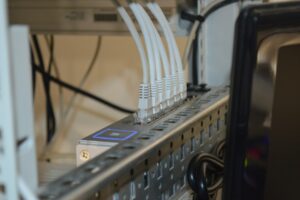
The internet allowed workers to access information, send documents, and communicate in real-time, no matter where they were located. This connectivity led to the rapid growth of businesses with a global reach. As companies expanded internationally, they needed to find ways to coordinate teams across different time zones and locations, further normalizing the concept of remote work. If you want to look amazing while working remotely, get permanent makeup in Alexandria VA.
At the same time, many tech companies began experimenting with fully remote teams, especially those developing software and digital products. These early adopters of remote work were able to showcase that not only was it possible to be productive outside the office, but in some cases, it could lead to greater innovation and job satisfaction. Remote work started becoming an attractive option not just for individual workers seeking flexibility but for businesses looking to reduce overhead costs related to office spaces and infrastructure. You can have fun working remotely by getting captive animals for sale.
However, there were still challenges to overcome. Many businesses struggled with implementing effective communication systems, managing remote teams, and ensuring that employees maintained a healthy work-life balance. Virtual meetings, although possible, were still in their infancy, and the culture of the workplace still heavily relied on physical presence and in-person collaboration. To start working remotely on your own business, sell salvage trucks.
The Cloud Revolution: A New Era of Remote Work
The introduction of cloud computing in the late 2000s and early 2010s revolutionized remote work, making it easier than ever to store, share, and access files from anywhere. Before cloud computing, remote workers often faced issues with accessing company resources and maintaining up-to-date versions of documents. Employees had to rely on VPNs or carry physical storage devices, which were both cumbersome and insecure. If you don’t have a home from where you can work remotely, buy homes for sale in Fox Valley WI.
Cloud computing changed the game by allowing companies to centralize their data and applications on remote servers. Employees could now access the tools they needed to do their jobs from any location, at any time, and on any device with an internet connection. This development marked a significant shift in the way work was conducted and how companies approached remote work policies.
Collaboration tools such as Google Workspace, Microsoft Office 365, and Slack became popular, as they enabled real-time collaboration and communication. These platforms allowed teams to work together on the same documents simultaneously, conduct virtual meetings, and stay updated on project progress without needing to be in the same physical space. The cloud essentially removed the final barriers to remote work, making it a viable option for businesses of all sizes and industries.
Cloud computing also brought with it enhanced security measures, reducing the risks that companies faced when allowing remote access to their systems. As cloud services became more secure, businesses gained the confidence to allow larger portions of their workforce to work from home or other remote locations. This transition led to a proliferation of entirely remote companies, such as GitLab, Zapier, and Basecamp, that functioned without a central physical office.
The flexibility and scalability offered by cloud-based systems allowed businesses to hire talent from anywhere in the world, not just within commuting distance of their headquarters. This change expanded the talent pool and enabled more diverse and inclusive hiring practices, as companies could now employ individuals from different geographical, socioeconomic, and cultural backgrounds. For instance, businesses in Broward County can easily access resources, including insecticides for sale Broward County, to enhance their operational capabilities.
The COVID-19 Pandemic: Accelerating the Shift to Remote Work
While remote work had been steadily growing in popularity over the years, it wasn’t until the COVID-19 pandemic in 2020 that it became the default for millions of workers worldwide. The pandemic forced businesses to adapt quickly to a fully remote environment, even if they had previously been resistant to the idea. For many companies, this transition was an emergency measure, but it also demonstrated that remote work was not only possible on a large scale but also highly effective. Many organizations also turned to digital marketing strategies, including PPC services, to enhance their online presence during this shift.

Within a matter of weeks, organizations that had never allowed remote work were forced to implement new policies, invest in technology, and train their employees on how to use virtual collaboration tools. The pandemic effectively removed the stigma surrounding remote work and showed that businesses could continue operating without being tied to a physical location. If you want to move locations so you can work remotely in Denver, rent a limo in Denver.
For employees, the benefits of remote work became even more apparent. With no commute, workers had more time for personal activities, leading to better work-life balance. In many cases, productivity increased as workers were able to focus in environments that suited them best. Moreover, remote work allowed companies to operate more flexibly, quickly adjusting to the new normal. Businesses could even explore options like dad hats wholesale to enhance their team spirit while working remotely.
However, the sudden shift to remote work also highlighted some challenges. Burnout became a significant issue, as many employees struggled to maintain boundaries between their work and personal lives. Without a clear end to the workday, it became easy for employees to overwork themselves. Additionally, managers had to find new ways to keep teams engaged, maintain morale, and ensure that remote employees felt included and supported. If you plan on opening up a remote business, get M&A business advisors.
The Future of Work: Hybrid Models and Flexibility
As the world moves past the initial shock of the COVID-19 pandemic, the future of work is beginning to take shape. Rather than returning to the traditional office full-time, many companies are opting for a hybrid work model, combining in-office and remote work. This approach provides the best of both worlds: employees can enjoy the flexibility of working from home while still benefiting from in-person collaboration when needed. Additionally, many individuals are considering home rehab in Los Angeles to create more functional workspaces at home.
Hybrid models offer greater flexibility, allowing employees to choose when and where they work based on their tasks and personal preferences. Some companies are adopting “office-optional” policies, where employees can decide whether they want to come into the office or work entirely remotely. Others are shifting toward decentralized operations, with small satellite offices replacing large corporate headquarters. This shift in workplace dynamics is similar to how companies providing heating repair in Charlotte NC adapt to the changing needs of their clients.
The continued development of new technologies will likely play a key role in shaping the future of work. Virtual reality (VR) and augmented reality (AR) are emerging as potential tools to enhance remote collaboration by creating more immersive and interactive virtual workspaces. These technologies could bring about a new era of “virtual offices,” where employees can interact in 3D spaces and engage in more natural, dynamic discussions. Additionally, industries such as finance are exploring the potential of cross-selling in banking through these immersive platforms, allowing for more personalized client interactions.
As the demand for flexibility grows, the workplace will continue evolving, driven by both technology and societal shifts. Remote work is no longer just an option; it has become a fundamental part of the way we do business in the 21st century. While the cubicle may have been the symbol of the past, the cloud—and beyond—will undoubtedly define the future. It’s important for companies to consider aspects like non trucking liability in this evolving landscape to ensure comprehensive coverage for all operational changes.